








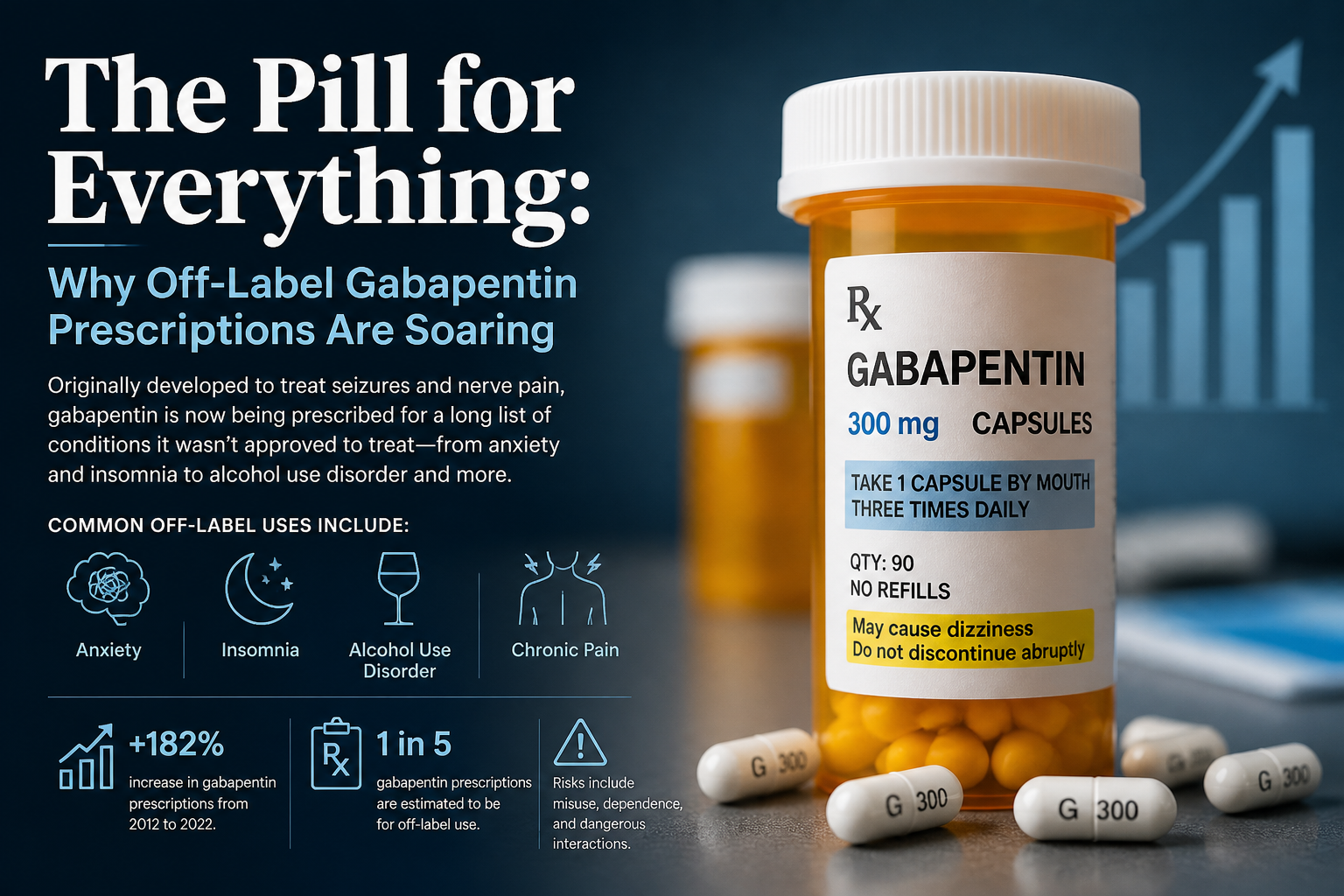


Gabapentin, originally developed to treat seizure disorders, has emerged as a widely used medication beyond its approved indications. Moreover, its off-label footprint stretches into neuropathic pain, anxiety, insomnia, migraines, and mood disorders. Clinicians and patients seek relief from persistent symptoms through this growing use.
Consequently, the surge in off-label prescribing reflects a complex mix of clinical experience, patient demand, and systemic factors. The Pill for Everything: Why Off-Label Gabapentin Prescriptions Are Soaring has become a topic of discussion as many factors drive prescribing. These dynamics shape how physicians discuss benefits and risks with patients.
Additionally, understanding this trend helps policymakers and clinicians balance access with safety. Moreover, ongoing research and careful prescribing can ensure patient outcomes remain central. The discussion connects patient experiences with broader healthcare practices and highlights the need for clear guidelines.
Understanding Gabapentin: What It Is and How It Works
Gabapentin is a prescription medication that modulates neural activity by influencing voltage-gated calcium channels.
However, the drug’s primary FDA-approved indications include certain seizures and neuropathic pain.
Moreover, The Pill for Everything prompts discussion about off-label gabapentin prescriptions.
It is generally well tolerated.
Common side effects include dizziness, drowsiness, and poor coordination.
However, serious events can occur with misuse or when combined with other depressants.
The Rise of Off-Label Use: Patterns and Drivers
Several converging factors contribute to the increasing use of gabapentin off label:
- Clinical experience: Anecdotal reports and observational studies have suggested symptom relief in conditions not originally targeted by the medication.
- Access and tolerance: Gabapentin is often perceived as safer or easier to prescribe compared with alternatives, especially for patients with comorbidities or polypharmacy.
- Time constraints: Primary care settings face pressure to address persistent symptoms quickly, and gabapentin may be viewed as a practical option.
- Patient demand: Individuals experiencing chronic pain, anxiety, or sleep disturbances may request a pharmacologic solution to improve quality of life.
- Marketing and perception: Ongoing discussions about neuropathic pain management can contribute to broader acceptance of gabapentin beyond its approved uses.
Benefits and Limitations: What the Evidence Shows
- Potential benefits: For some patients, gabapentin may alleviate neuropathic pain, reduce anxiety symptoms, and improve sleep quality, particularly when other therapies have fallen short.
- Limitations: High-quality evidence for many off-label indications is inconsistent or limited. Benefits may be modest, and the risk of adverse effects or dependency can complicate long-term use.
- Individual variation: Response to gabapentin is highly variable, necessitating careful monitoring, dose adjustment, and consideration of patient history and concomitant medications.
Concerns and Risks: Safety, Dependency, and Regulatory Questions
- Dependence and misuse: While not a classic opioid, gabapentin can be misused, especially in combination with other substances, raising safety concerns.
- Safety in special populations: Elderly patients, those with kidney impairment, or individuals taking central nervous system depressants require cautious dosing and monitoring.
- Tapering challenges: Discontinuation should be gradual to minimize withdrawal symptoms and rebound effects.
- Regulatory scrutiny: Some regions have heightened oversight over off-label prescribing practices, urging clinicians to document justification and adhere to evidence-informed guidelines.
Prescribing Best Practices: Balancing Benefit and Caution
- Diagnostic clarity: Documenting the rationale for off-label use, including symptom targets, prior treatments, and anticipated benefits.
- Start low, go slow: Initiating treatment at a conservative dose and titrating carefully to minimize side effects.
- Regular re-evaluation: Scheduling follow-ups to assess efficacy, tolerability, and the ongoing need for therapy.
- Multimodal approaches: Integrating non-pharmacologic therapies and alternative medications when appropriate to reduce reliance on a single agent.
- Patient education: Discussing potential risks, signs of adverse effects, and the plan for dose adjustments or discontinuation.
Alternatives and Complementary Options
- Non-pharmacologic strategies: Physical therapy, cognitive-behavioral therapy, mindfulness-based approaches, and sleep hygiene can address many symptoms with lower risk profiles.
- Other medications: Depending on the condition, clinicians may consider anticonvulsants with established indications, antidepressants, or analgesics with clearer evidence for specific symptoms.
- Coordinated care: Collaboration among primary care, neurology, psychiatry, and pain management specialists can optimize treatment plans and reduce unnecessary polypharmacy.
Conclusion: Navigating Off-Label Gabapentin Use Responsibly
Moreover, the popularity of gabapentin beyond approved uses signals relief seeking amid persistent symptoms. However, The Pill for Everything: Why Off-Label Gabapentin Prescriptions Are Soaring underscores the need for rigorous clinical judgment and monitoring. Ongoing research, prudent prescribing, and patient-centered decisions remain essential as clinicians balance efficacy with safety.
