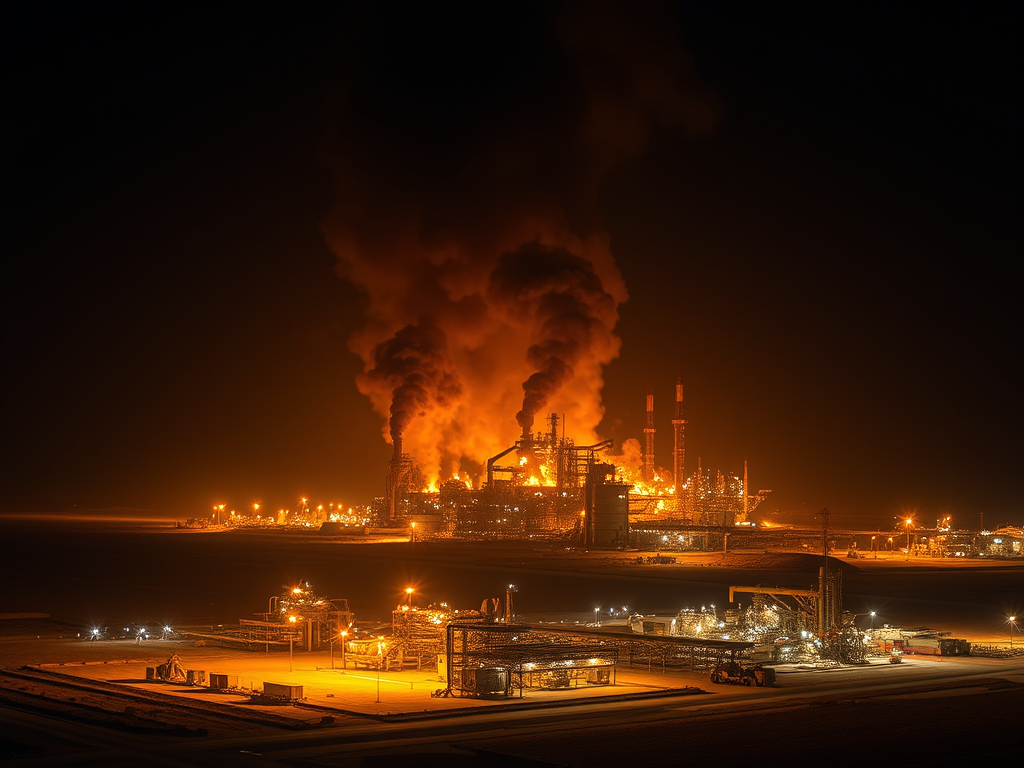
In a startling incident, one of the United Arab Emirates’ critical energy infrastructure sites erupted in flames, casting an ominous glow against the desert night sky. The Habshan gas-processing site, an integral part of the UAE’s energy network, found itself at the receiving end of an alleged Iranian attack. Abu Dhabi’s authorities confirmed this incident early yesterday in a development that has significant geopolitical implications and could potentially destabilize the already tense energy markets.
Situated approximately 150 kilometres southwest of Abu Dhabi, the Habshan gas-processing site plays a crucial role in providing electricity to the UAE and is considered one of the critical locations in the MENA (Middle East and North Africa) region. It’s a primary link in the country’s energy supply chain, processing sour gas for residential, commercial, and industrial uses across the Emirates. A disruption in its operations could have significant cascading effects on the energy grid.
The suspected attack on Habshan adds another dimension to the escalating tensions between Iran and the UAE, against the backdrop of broader regional conflicts. For several years now, the two countries have had a strained relationship, primarily due to Iran’s nuclear ambitions and the UAE’s strategic alignment with Saudi Arabia and the United States.
While no casualties have been reported so far, the gravity of this attack cannot be underestimated as it marks a disturbing departure from most previous incidents. It targets critical civilian infrastructure rather than military installations, showing an increased willingness to risk backlash from the international community.
Furthermore, the attack comes amidst already high global oil prices due to supply uncertainties. It is feared that these incidents will only exacerbate the situation, causing prices to spiral even higher. The knock-on effects of such a development could be far-reaching, given the reliance of many countries on oil supplied from the Middle East.
But perhaps an even more significant concern is the risk of a regional conflagration. The Gulf has long been a hotbed of geopolitical tensions, and disturbances such as these could tip the delicate balance and lead to full-blown conflict.
The effectiveness of international diplomacy and regional statesmanship is sure to be tested in the following days. The challenge lies not only in managing immediate reaction to the attack but also in preventing further escalation of hostilities. Comprehensive and far-sighted responses are needed to ensure regional stability, safeguard global energy supplies, and maintain price stability.
In conclusion, the alleged Iranian attack on the Habshan gas-processing site in Abu Dhabi promises to inject new uncertainty into an already volatile regional scenario. Its implications extend far beyond the immediate damage on the site, promising to reverberate across the geopolitical landscape, impacting energy prices and potentially the global economy. It is a timely reminder of the interconnectedness of today’s world and the shared responsibility of maintaining peace, stability, and mutual respect for national sovereignty.
Discover more from -
Subscribe to get the latest posts sent to your email.