Imagine a young woman, Maria, who arrived in the United States as a victim of human trafficking. She is desperate to report her abusers and seek justice, but fears deportation if she comes forward. Maria hears about the U visa, a special visa for victims of crimes who cooperate with law enforcement, and sees a glimmer of hope. However, what Maria doesn’t realize is that the U visa process is riddled with loopholes and fraud, putting her and thousands of other victims at risk.
The U visa was created by Congress in 2000 to encourage immigrants who are victims of crimes such as domestic violence, sexual assault, and human trafficking to come forward and assist law enforcement in the prosecution of their abusers. However, over the years, the U visa process has been exploited by criminals and fraudulent applicants, leading to long backlogs and delays for legitimate victims like Maria.
One of the key issues with the U visa process is the lack of oversight and enforcement mechanisms to prevent fraud. Many applicants exaggerate or fabricate their stories of victimization in order to qualify for the visa, while others pay bribes or engage in other illegal activities to expedite their applications. This not only undermines the integrity of the U visa program, but also jeopardizes the safety and well-being of genuine victims who are in need of protection.
Another major concern is the sheer volume of U visa applications that are flooding the system. In recent years, the number of U visa petitions has skyrocketed, causing extensive processing delays and making it difficult for law enforcement agencies to prioritize cases and provide necessary support to victims. As a result, many victims are left in limbo, unable to access the protection and services they desperately need.
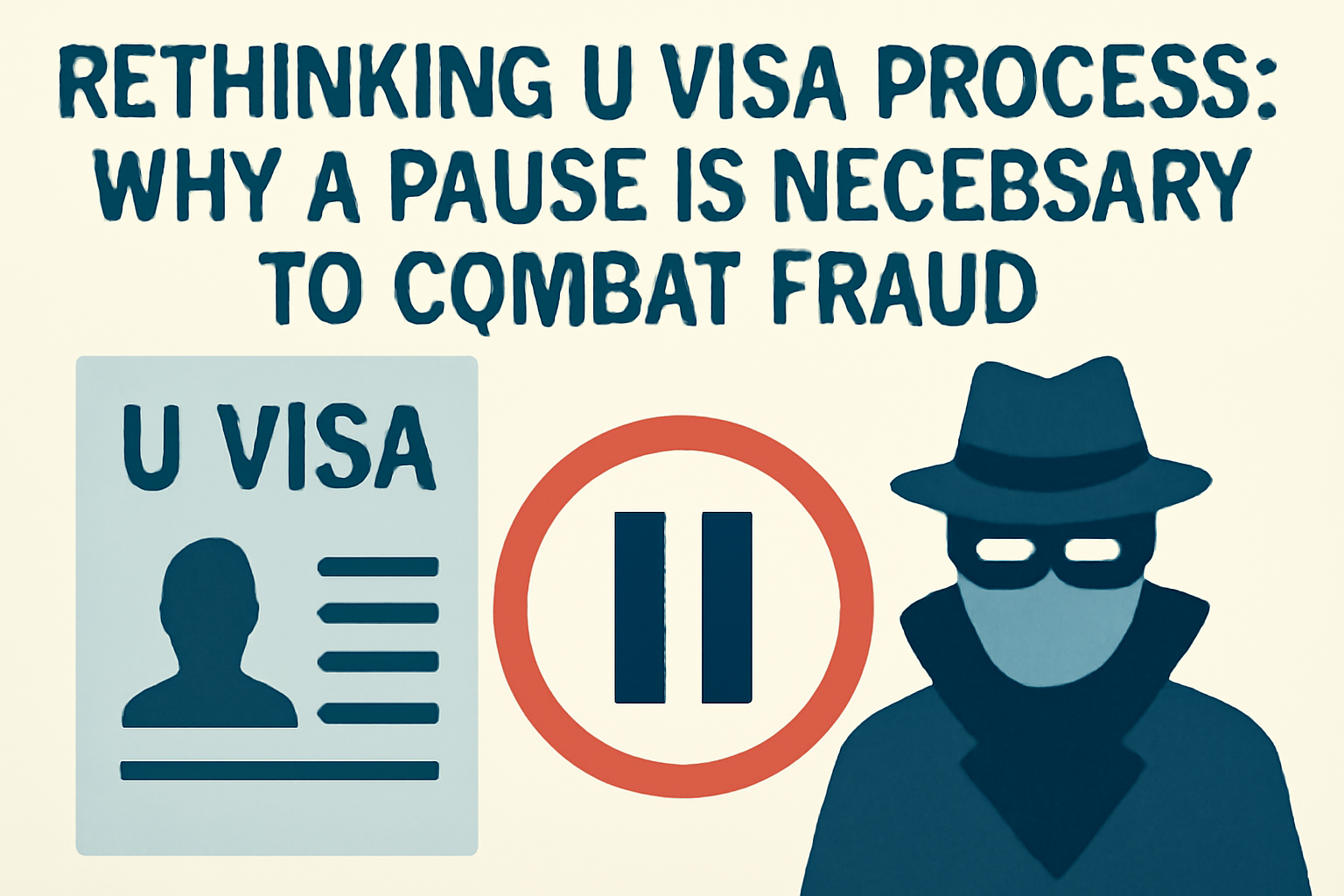
In light of these challenges, it is clear that a pause in the U visa process is necessary to combat fraud and ensure that the program serves its intended purpose of protecting victims of crimes. By implementing stricter eligibility criteria, increasing resources for fraud detection and investigation, and streamlining the application process, the U visa program can be strengthened and better equipped to support legitimate victims like Maria.
In conclusion, rethinking the U visa process is essential to safeguard the rights and well-being of victims of crimes who are seeking protection and justice in the United States. A pause in the program, coupled with reforms and enhanced oversight measures, can help deter fraud, reduce backlogs, and ensure that the U visa program remains a vital tool for combating crime and supporting survivors. It is time to prioritize the needs of genuine victims and take decisive action to address the weaknesses and vulnerabilities in the U visa system.
Discover more from -
Subscribe to get the latest posts sent to your email.