
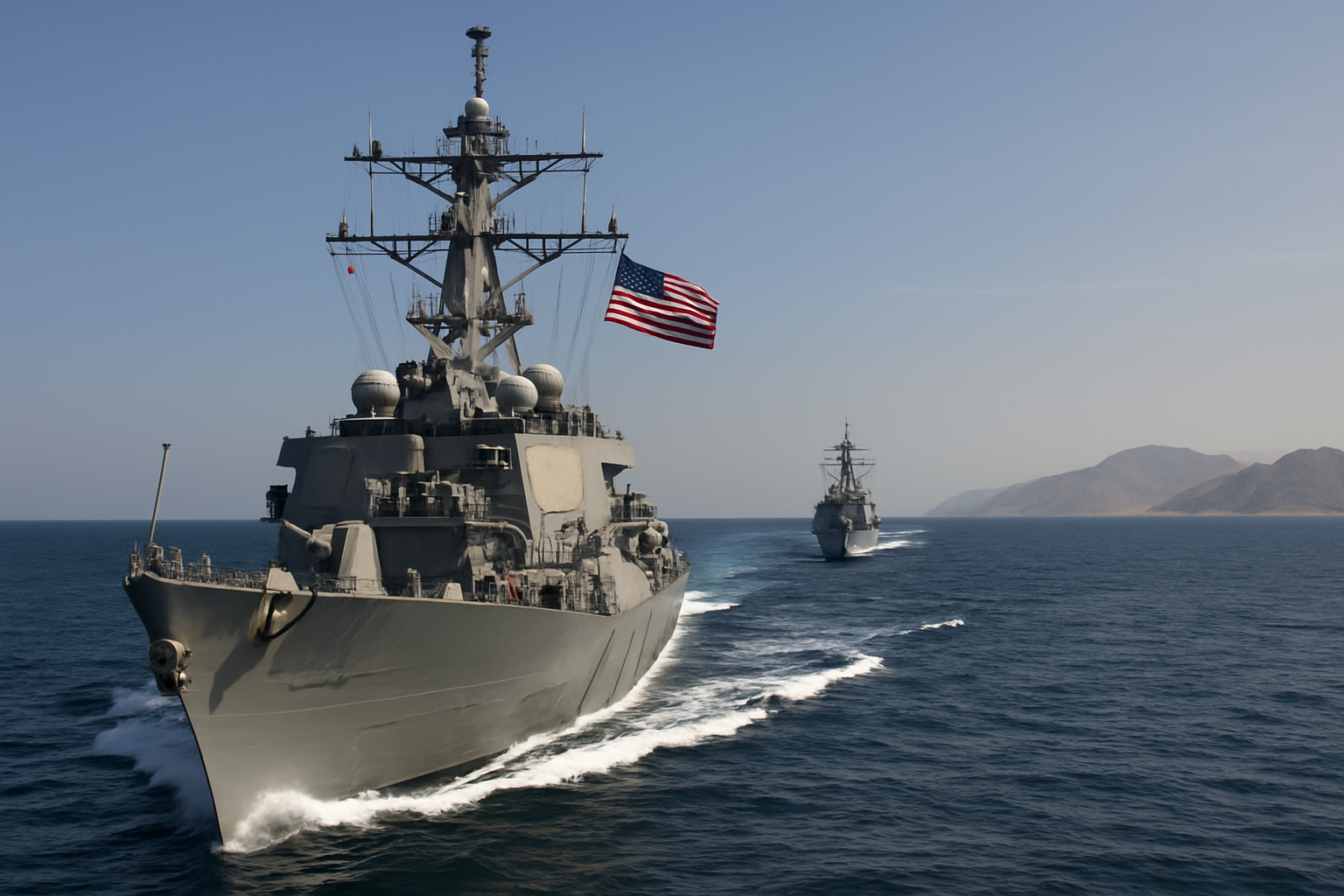
Amidst tensions as volatile as a lit fuse nearing its end, two U.S. warships have braved the strategically crucial Strait of Hormuz. The transit took place as mine-clearing operations commenced in the area, according to United States Central Command (CENTCOM). This significant event underscores the complex geopolitical scenario in the region, the importance of the Strait of Hormuz, the necessity of the mine-clearing operations, and the response of pertinent regional powers.
An Axis of Power: The Strait of Hormuz’s Geopolitical Significance
Nestled between the Persian Gulf and the Gulf of Oman, the Strait of Hormuz is narrow but mighty. It is a crucial artery in the global oil supply network, accommodating the passage of nearly a third of the world’s liquefied natural gas and almost 20% of total global oil consumption. Any disruption in this channel could set off a domino effect, leading to global energy supply disturbances, and potentially triggering far-reaching economic repercussions.
Braving the Waters: The Role of U.S. Warships

The transit of the two warships aligns with a perpetual U.S. presence in the Strait, designed to ensure the free and safe passage of ships. The vessels in question, USS Monterey and USS Thomas Hudner, aimed to reflect an undeniable commitment from the U.S. to protect shipping routes from disruption, aggression, or illegal activity. The fixture of these substantial ships in the perilous Strait resonates with a potent message – a commitment to the preservation of international law and freedom of navigation.
Counter-Crisis Measures: The Mine-clearing Operations
This audacious move by the U.S. military comes in response to recent mine incidents in the region – covert operations by unnamed adversaries that threaten international shipping routes. The mine-clearing operations, therefore, serve as both a means of securing current safety and deterring future sabotage attempts. The United States Navy’s efficient and expert handling of such a situation embodies a clear statement to potential aggressors – the disruption of international commerce and freedom of navigation will not be tolerated.
The Response of Regional Powers

Undoubtedly, this course of action resonates across the geopolitical spectrum, prompting various reactions. Iran, positioned on the north coast of the Strait, has previously threatened to close this crucial waterway in retaliation for any hostile action. The response of this regional power to the recent events, alongside the reactions of other stakeholders within the region, will play a critical role in shaping the trajectory of this tense situation.
In Conclusion
The Strait of Hormuz is not just a geographical marvel; it’s a test of resilience, a power corridor, commanding the global spotlight. The recent transit of U.S. warships and the simultaneous commencement of mine-clearing operations add a new chapter to this high-stakes narrative. While the echoes of this activity reverberate through international relations, it is not merely their audacious execution but the aftermath and regional response that will truly shape future strategies and policies.
Discover more from -
Subscribe to get the latest posts sent to your email.