
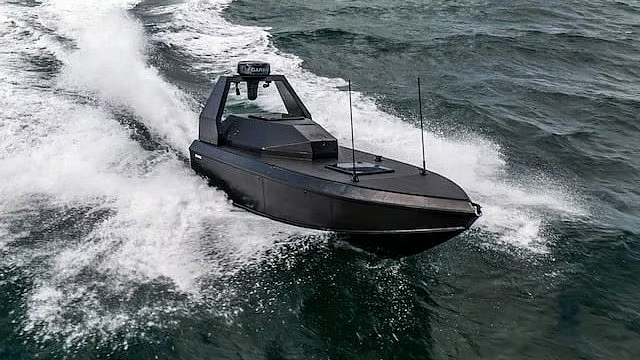
In a bold move amidst rising tensions with Iran, the US Navy has recently deployed unmanned surface vessels to patrol the waters of the Persian Gulf. This decision comes in response to increasing threats and provocations from Iranian forces, signaling a shift towards utilizing cutting-edge technology in the face of potential conflict.
The deployment of unmanned surface vessels represents a significant advancement in naval warfare, allowing for increased surveillance and reconnaissance capabilities without risking the lives of human personnel. These autonomous vessels are equipped with state-of-the-art sensors and communication systems, providing a real-time picture of the maritime environment and enhancing situational awareness for US forces in the region.
One of the key advantages of using unmanned surface vessels is their ability to operate in high-risk environments where manned ships may be vulnerable to attack. By utilizing autonomous technology, the US Navy can effectively monitor Iranian activities in the Persian Gulf while minimizing the risk to personnel and assets.
Furthermore, the deployment of unmanned surface vessels demonstrates the US Navy’s commitment to innovation and adaptability in a rapidly evolving security landscape. As threats from Iran continue to escalate, it is essential for the military to leverage cutting-edge technology to maintain a strategic advantage and protect national interests in the region.
Overall, the deployment of unmanned surface vessels in tensions with Iran represents a strategic and forward-thinking approach to maritime security. By harnessing the power of autonomous technology, the US Navy is better positioned to defend against potential threats and safeguard freedom of navigation in critical waterways. As the situation unfolds, it will be crucial to monitor the impact of these unmanned vessels on the tense standoff with Iran and assess their effectiveness in maintaining stability and security in the Persian Gulf.
Amidst the rising tensions between the United States and Iran, a new and unconventional player has entered the fray – uncrewed drone speedboats. In a startling development, the Pentagon has confirmed the deployment of these autonomous vessels in operations against Iran, marking their first known use in active conflict.
The United States has long been at the forefront of military innovation, and the use of uncrewed drone speedboats is yet another testament to their commitment to staying ahead of the curve. These vessels are capable of conducting surveillance and carrying out kamikaze-style strikes, making them a formidable force on the battlefield.
The decision to deploy these autonomous vessels comes despite past setbacks in the US Navy’s efforts to develop a reliable fleet of unmanned surface vessels. The development and deployment of such technology represents a significant shift in the way the US military conducts operations, opening up new possibilities for strategic and tactical maneuvering.
The use of uncrewed drone speedboats raises important questions about the future of warfare and the ethical implications of autonomous weapons systems. While these vessels offer the potential for increased efficiency and precision in combat operations, they also raise concerns about the risks of escalation and unintended consequences.
As the United States continues to navigate the complex and volatile geopolitical landscape of the Middle East, the deployment of uncrewed drone speedboats represents a bold and innovative approach to military operations. Only time will tell how this new technology will shape the course of future conflicts and the evolving nature of warfare.
Discover more from -
Subscribe to get the latest posts sent to your email.