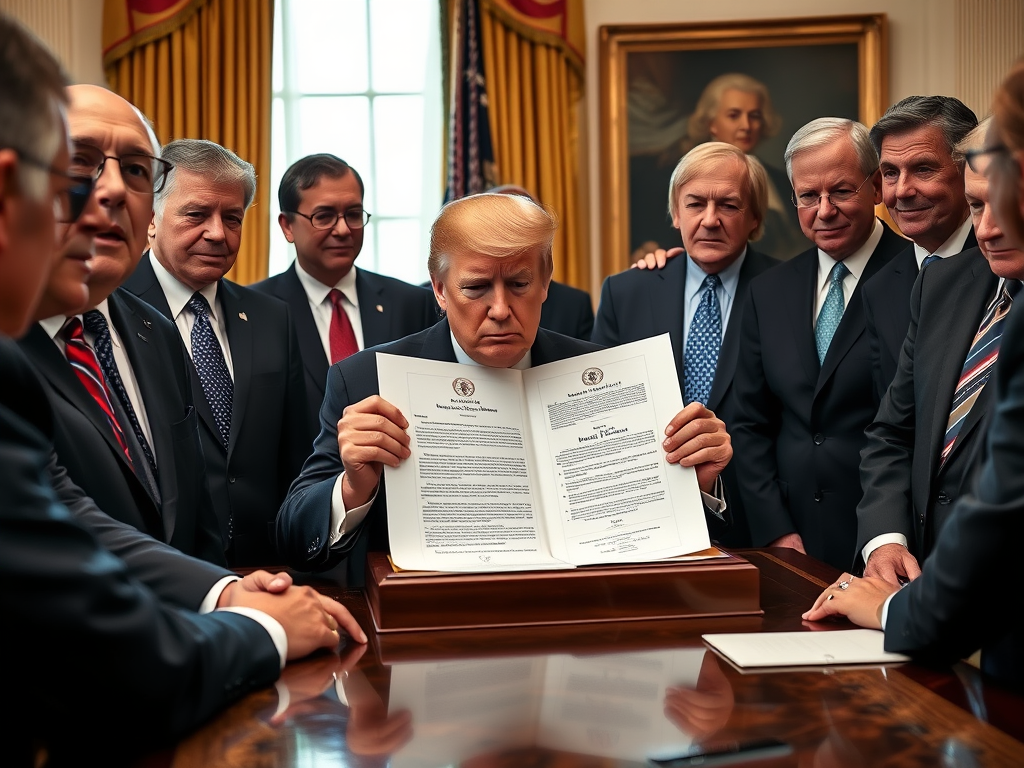
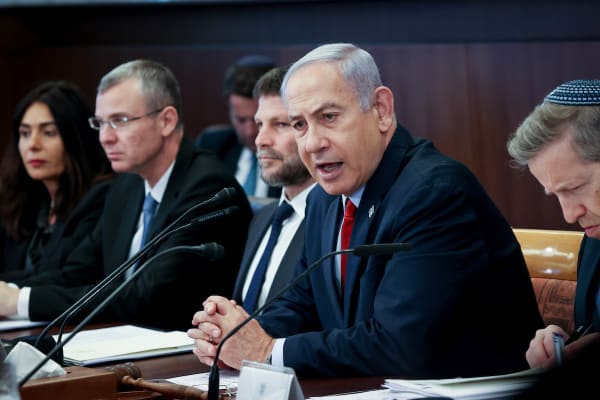
In an unforeseen turn of events that has the potential to significantly realign geopolitical dynamics, a White House official confirmed that Israel has agreed to the terms of the US-Iran ceasefire. This development ushers in a new era of diplomacy and potentially marks the end of one of the most contentious relationships in recent Middle Eastern history. Yet, the agreement is not without its caveats, as an intricate matrix of interests and considerations underscore this move.
The headline-worthy validation from the White House arrives on the backdrop of simmering tensions. Years of conflict-riddled relations between Iran and the United States, qualitatively exacerbated after US decided to withdraw unilaterally from the Iran nuclear deal in 2018, have not just kept the international community on tenterhooks, but cast a long shadow on regional peace.
A primary component of the diplomatic breakthrough involves nuclear disarmament. Often considered a non-negotiable point of contention, Iran’s nuclear issue has now found a resolution after exhaustive multilateral deliberation and negotiation. The Islamic republic has agreed to halt its uranium enrichment program, a promising move towards nuclear non-proliferation.
Meanwhile, the United States has pledged to alleviate crippling economic sanctions that were imposed on Iran, a critical concession that promises to ameliorate Iran’s beleaguered economy. This humane gesture is not just viewed as a critical lynchpin to warm up frosty relations, but also as an acknowledgment of the hardships that Iranian citizens have encountered under these sanctions.
Another point of crucial consensus pertains to the power equilibrium in the Middle East. It has been underscored that Iran will refrain from extending financial or military support to paramilitary groups in the region, a step which indicates its commitment to promoting regional peace and stability.
What adds an intriguing nuance to this geopolitical development is Israel’s unexpected agreement to the terms of the US-Iran ceasefire. Historically, Israel has been vociferously against Iran’s nuclear ambitions, perceiving them as an existential threat. This shift in Israel’s stance has come as a surprise to political pundits worldwide.
The Israeli acknowledgment, according to the White House official, is embedded in the broader commitment to regional peace and stability. It demonstrates the Jewish nation’s willingness to recalibrate its stance on erstwhile foes in the interest of a cohesive regional security architecture, undoubtedly a transformative move in the geopolitics of the Middle East.
Certainly, the road that led to this truce was far from easy. The various nuances of the agreement reflect the painstaking nature of diplomacy, fraught with reverberating national and regional interests. Yet, the consensus reached, contradictory as it may seem to past hostilities, speaks to a shared commitment to foster peace, stability, and mutual respect in one of the world’s most tumultuous regions.
The tenets of this diplomatic breakthrough offer not only a sighting of peace in an otherwise conflict-riddled region but also a template of what arduous diplomacy, hard-negotiated compromise, and earnest commitment to peace can achieve. Indeed, the ceasefire signifies a departure from zero-sum gamesmanship and a leap towards constructive diplomacy replete with hope, resilience, and restoration.
Discover more from -
Subscribe to get the latest posts sent to your email.