

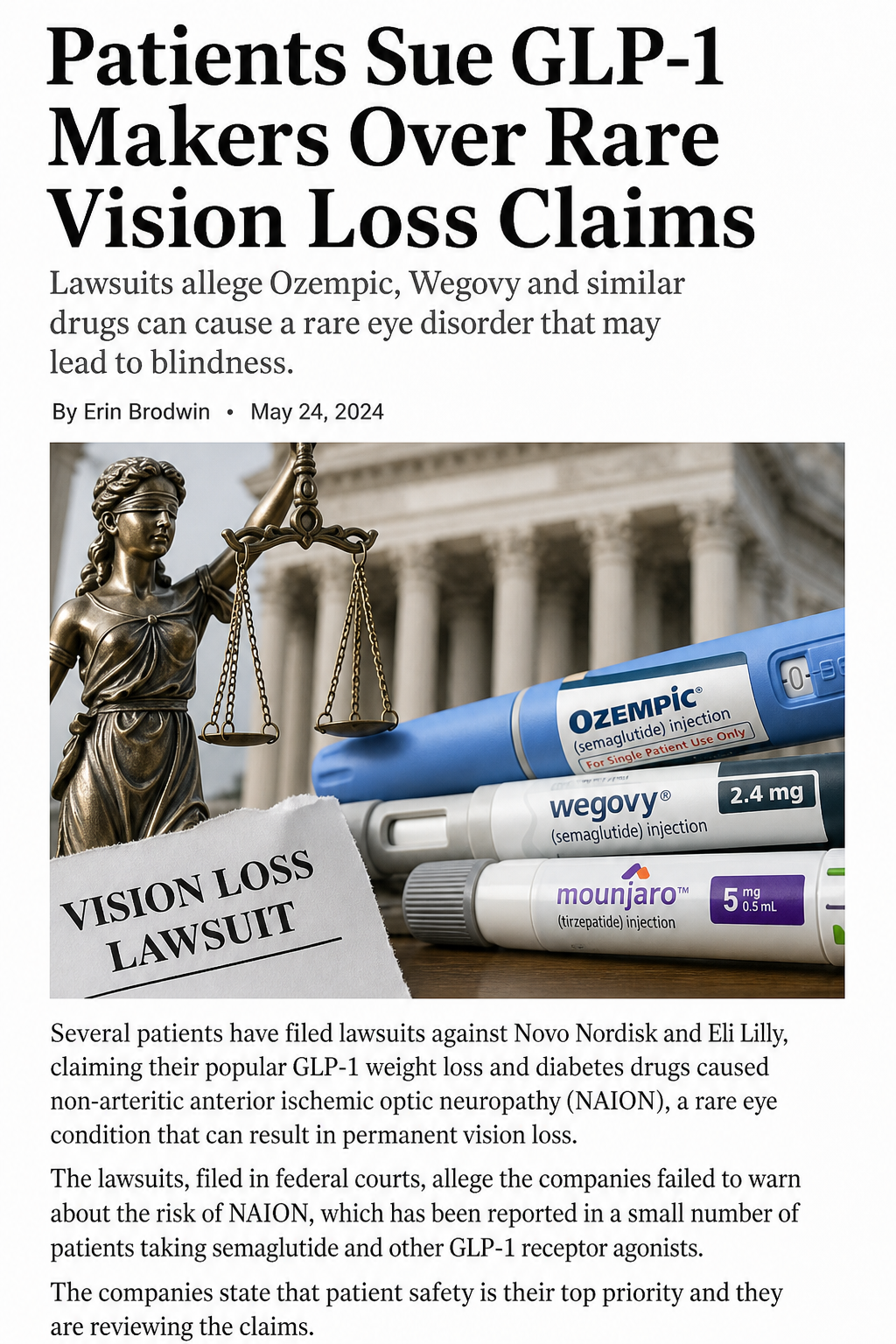



Patients Sue GLP-1 Makers Over Rare Vision Loss Claims
Overview
A number of patients have initiated lawsuits alleging that certain incretin-based therapies, particularly GLP-1 receptor agonists, contributed to or caused rare instances of vision loss. The actions raise questions about post-market safety signals, patient consent, and the responsibility of pharmaceutical manufacturers to disclose potential risks. Legal arguments commonly focus on alleged failure to warn, negligence, and product liability standards.
Background on GLP-1 Therapies
GLP-1 receptor agonists are a class of medications primarily used to treat type 2 diabetes and, in some cases, obesity. They mimic the action of the body’s GLP-1 hormone, promoting insulin release, reducing appetite, and aiding glycemic control. While generally well tolerated, these medications have been subject to ongoing safety monitoring as rare adverse events are reported.
Reports of Vision Loss
Plaintiffs contend that exposure to GLP-1 therapies may be linked to certain ocular conditions, including progressive vision impairment or retinal complications. They assert that side effects were either insufficiently disclosed or not fully understood at the time of marketing. Defendants maintain that the products have undergone rigorous testing and post-market surveillance, with reported safety profiles showing no proven causal relationship to the claimed vision outcomes.
Legal Landscape
- Regulatory bodies continue to review safety data and may require label amendments if new evidence emerges.
- Litigation frequently centers on whether adequate warnings were provided to patients and healthcare providers.
- Cases may hinge on establishing causation, timing of onset, and the contribution of preexisting conditions or other risk factors.
- Settlements or court decisions can influence the regulatory approach to risk communication and patient education.
Implications for Patients and Providers
- Patients should discuss any new or unusual visual symptoms promptly with a healthcare professional.
- Clinicians may need to review patient histories for risk factors and consider differential diagnoses when vision changes occur.
- Manufacturers may re-evaluate labeling, patient information leaflets, and clinical guidance to ensure clarity regarding rare adverse events.
What to Consider if You Are Involved
- Gather medical records, prescription histories, and documentation of symptom onset and progression.
- Seek advice from legal counsel experienced in pharmaceutical litigation and from medical professionals to assess potential causation.
- Understand the statute of limitations and jurisdictional requirements, as these can affect case viability and timing.
Conclusion
The litigation surrounding GLP-1 therapies and rare vision loss claims underscores the importance of transparent risk communication and robust pharmacovigilance. Ongoing judicial proceedings and regulatory reviews will contribute to shaping safer use guidelines and informed decision-making for patients and clinicians alike.