

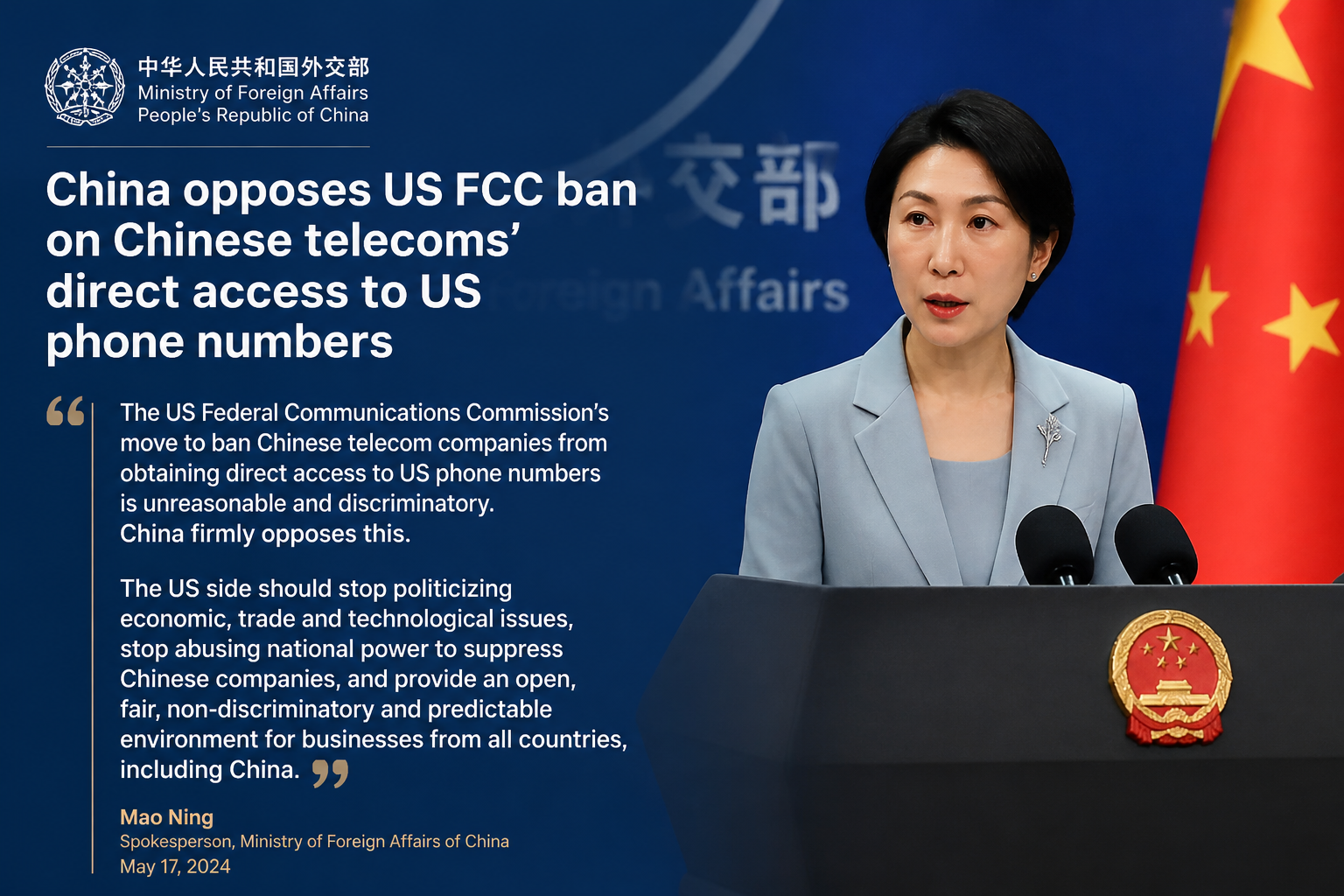







China opposes US FCC ban on Chinese telecoms’ direct access to US phone numbers, amid rising security concerns.
Moreover, the policy underscores ongoing tensions over telecommunications security and data privacy.
It also touches on national sovereignty in the digital age.
Background of the FCC measure
The FCC move seeks to regulate the direct provisioning of US telephone numbers by identified Chinese telecoms.
Additionally, proponents argue that the measure reduces potential security risks and protects American users from possible interference or surveillance.
However, critics contend that the policy may complicate cross-border communication.
It could also affect service reliability and escalate techno-geopolitical frictions between the two countries.
China’s position and rationale
- Beijing views the ban as an overt restriction targeting Chinese entities and potentially infringing on the legitimate rights of Chinese firms operating internationally.
- Chinese authorities have repeatedly emphasized that measures of this kind should be grounded in objective evidence and applied without discrimination against specific national groups.
- The government asserts that fair, non-discriminatory regulatory practices are essential for healthy international trade and cooperation in the digital economy.
Potential implications for the telecom sector
- For Chinese operators: Direct access to US phone numbers underpins various international roaming, messaging, and number portability services. The ban could necessitate rerouting through third-country intermediaries, potentially increasing latency and operational complexity.
- For US consumers: The policy might influence the availability and cost of cross-border telecom services, with possible impacts on service quality and choice.
- For bilateral relations: The dispute adds to a broader set of frictions over 5G, cybersecurity, supply chains, and technology access, potentially shaping investment decisions and regulatory alignments in the near term.
International reactions and market expectations
Industry groups and policymakers have urged for careful consideration of security concerns alongside the practical needs of global connectivity. Some observers expect a period of negotiation or judicial review as stakeholders assess compliance timelines, technical feasibility, and potential exemptions for specific services or operators.
Outlook
The dispute underscores the challenge of balancing national security concerns with the benefits of an open, interoperable global telecom ecosystem. Developments in regulatory approaches, multilateral dialogue, and potential concessions will likely influence the trajectory of cross-border telecommunications governance in the months ahead.
