
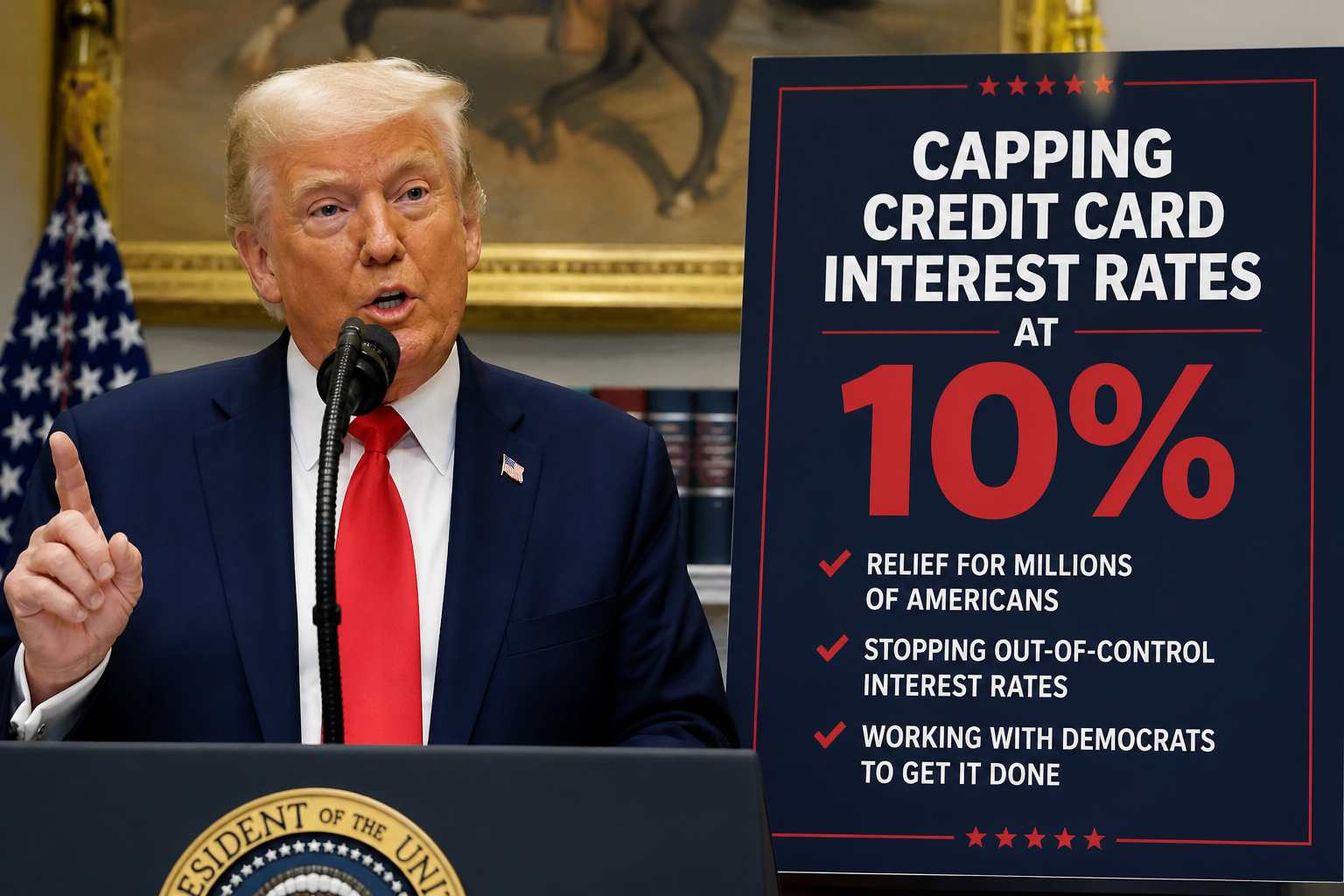







Consequently, in a public statement today, former President Donald Trump announced an intention to collaborate with Democratic leaders.
Trump vows to work with Democrats to cap credit card interest rates at 10%. The proposal would shift consumer finance policy and provide relief to borrowers facing high daily interest charges.
Context
Supporters argue that a standardized rate cap would help curb predatory lending practices and reduce the debt burden on households.
However, opponents contend that such a cap could constrain lending, potentially limiting credit access or raising costs for compliant borrowers.
The policy would require legislative approval and could involve a broader package of consumer protections.
Details of the proposal
Additionally, the plan aligns with Trump vows to work with Democrats to cap credit card interest rates at 10%.
Moreover, exemptions or phased implementations may be considered to accommodate existing card agreements and small lenders.
Therefore, the proposal emphasizes enforcement mechanisms to prevent circumventing the cap and to ensure compliance across banks, fintechs, and lenders.
Potential impacts
Supporters anticipate improved consumer repayment outcomes and reduced default rates.
However, critics warn of possible reductions in available credit, altered fee structures, or shifts in pricing to other services.
Market responses, regulator actions, and industry lobbying will likely shape the eventual framework and timeline.
Reactions
Industry groups and consumer advocates have begun signaling positions amid ongoing discussions about financial policy. Their statements emphasize balanced protections and sustainable access to consumer credit for households nationwide. Advocates also stress transparent terms and responsible lending standards across lenders and products.
Lawmakers will scrutinize the proposal during committee hearings and public comment periods. They will assess economic implications and consider potential amendments during debate and deliberation. Stakeholders expect findings to influence financing rules, consumer protections, and the broader credit market. Lawmakers plan to balance risk with access as debates proceed.

