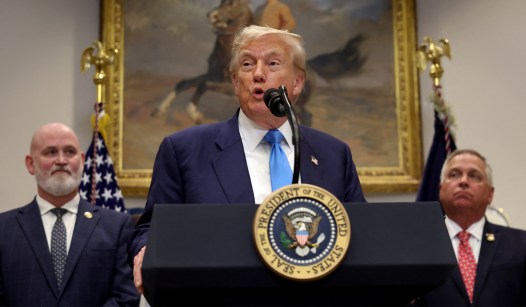

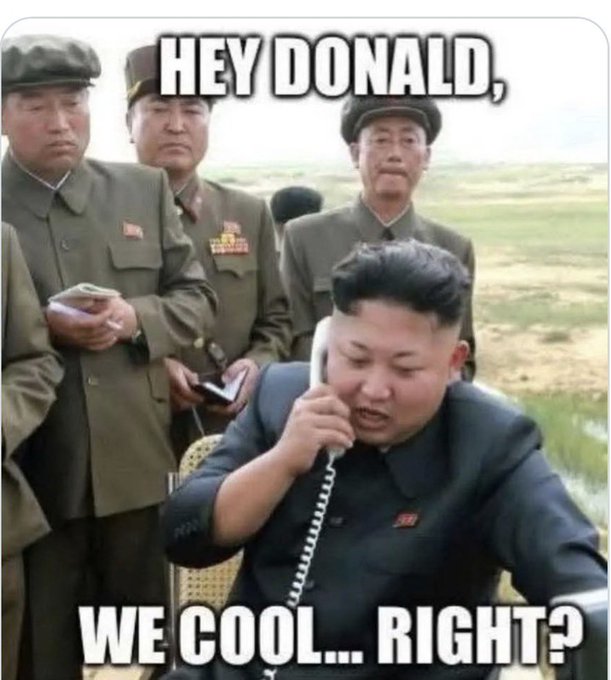
In the grand cathedral of global politics, rare are the moments that inject a vivid tint of personality into the staid diplomatic exchanges. One such unexpected instance arrived at the second US-North Korea summit in Hanoi, when North Korea’s Supreme Leader Kim Jong Un posed a disarmingly casual question to then-US President Donald Trump: “Are we cool?”
This intriguing episode voyeuristically opens a window into the complex dynamics of the US-North Korea relationship, further illuminating the personal rapport established between Trump and Kim Jong Un. The question also underscores the complexity of diplomacy and negotiation, the role of personal relationships, and the high stakes implicit in their discourse.
Intricacies of Diplomacy and Negotiation
Kim’s informal query to Trump could be viewed as a manifestation of an idiosyncratic negotiating style. Given the formality of diplomatic speeches and the nuanced, careful prose of official communiqués, the straightforwardness of the question stands out.
It suggests investing in a friendly, personable dynamic, in keeping with Trump’s assessment of Kim as a “tough guy” but a “smart cookie” that he “fell in love” with. This unconventional conversation approach, decidedly removed from usual diplomatic parlance, denotes a distinct strategy seeking to build a bond beyond the rigidities of global politics and formal negotiations.
Role of Personal Relationships in Politics
This incident also accentuates the importance of personal relationships in international politics. The personal rapport between Trump and Kim Jong Un, initially touted as a fresh approach to stalemate diplomatic negotiations, was seen as instrumental for any potential rapprochement between the two nations.
The American President’s unprecedented diplomacy, based on personal chemistry rather than conventional statecraft, was a significant break from the past. However, it also risked the potential pitfall of reducing complex diplomatic negotiations to the whims of personal likings and dislikings.
High Stakes Behind Casual Conversations
Kim’s seemingly casual question further points to the high stakes involved in the US-North Korea talks. Despite its colloquial tone, it underscored a critical issue: was the personal bond between the two leaders sufficient to override decades-long political differences?
Consider the backdrop against which it was asked – nuclear disarmament, economic sanctions, human rights abuses, and state-led propaganda. These issues form the high-stakes chessboard upon which Kim and Trump’s personal rapport unfolded. Thus, while ‘coolness’ is usually a casual concern, in this context, it becomes weighted with the potential implications for global security.
In conclusion, Kim Jong Un’s seemingly straightforward question to Donald Trump offers critical insights into international politics’ complex dynamics. It reflects the attempted personalization of diplomacy, the significant role personal relationships play in diplomatic negotiations, and the high stakes camouflaged within informal conversations. However, whether such an approach definitively aids in resolving deeply entrenched political and ideological differences remains an open-ended question, with the jury still out on this unorthodox diplomatic experiment.
Discover more from -
Subscribe to get the latest posts sent to your email.