






Summary
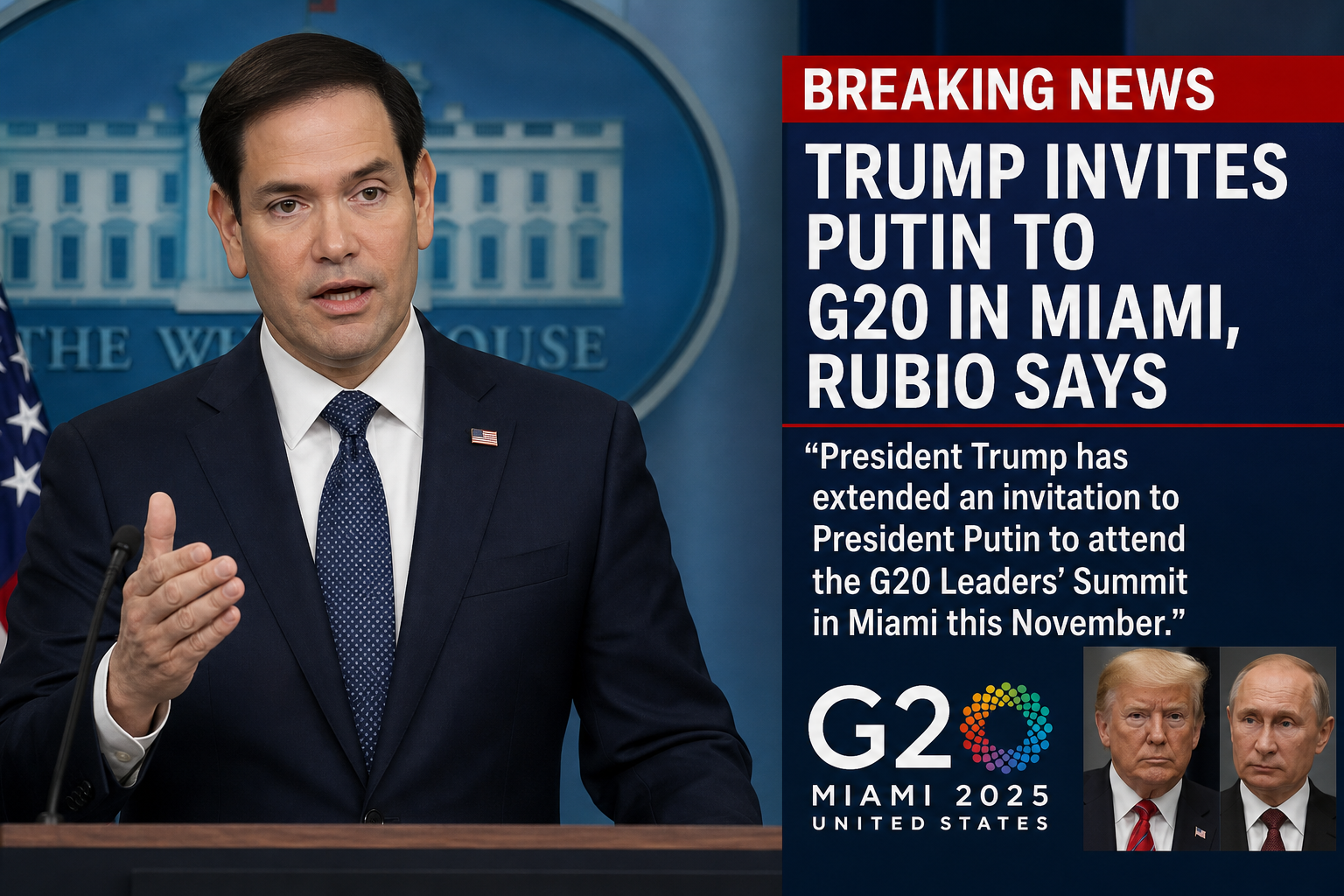
Trump invites Putin to the upcoming G20 in Miami, drawing varied responses from political observers and allied voices, including Senator Marco Rubio who weighs in on the potential implications of such an invitation.
Background
- The G20 summit gathers leaders from the world’s major economies to discuss international economic policy, security, and related global challenges.
- Previous occasions of high-level engagement with Russia have been scrutinized for their potential effects on alliance cohesion, sanctions regimes, and diplomatic signaling.
- Public statements regarding invitations to high-profile figures often reflect broader policy debates on confrontation versus engagement in strategic theaters.
Rubio’s Perspective
Senator Marco Rubio commented on the proposed invitation, emphasizing considerations such as national security, the expectations of U.S. allies, and the messaging conveyed to adversaries. His remarks highlighted the need to balance opportunities for dialogue with the preservation of sanctions architecture and allied consensus.
Potential Implications
- Diplomatic signaling: An invitation to Putin may be interpreted as an invitation to rehabilitate or normalize relations, depending on accompanying conditions and concessions.
- Alliance dynamics: U.S. partners in Europe and other regions may evaluate the move in light of ongoing sanctions, military posture, and coordination on global security challenges.
- Policy trajectory: The decision could influence ongoing discussions about sanctions relief, arms control prospects, and strategic stability with Russia.
- Domestic reception: Within the United States, responses may vary across political lines, reflecting broader debates on foreign policy strategy and national security priorities.
Possible Scenarios
- Conditional invitation: The summit hosts may frame the invitation with stringent conditions tied to verifiable actions on compliance with international norms.
- Limited engagement: Putin’s presence could be superficial, accompanied by controlled interactions to minimize risk while preserving diplomatic optics.
- Rejected invitation: In the event of near-term policy disagreements or security concerns, the invitation might be rescinded or redirected toward alternative channels.
Reactions and Editorial Voices
Commentary from policymakers, international relations scholars, and think tanks is likely to surface, offering a spectrum of viewpoints on whether engagement at the G20 would advance U.S. interests or complicate existing sanctions regimes. Analysts may point to historical outcomes of high-level conversations with Russia and the varying success of diplomatic gambits.
Conclusion
The prospect of inviting a figure such as Putin to a high-profile forum like the G20 raises fundamental questions about strategy, alliance cohesion, and the signaling value of presidential diplomacy. As discussions unfold, stakeholders will weigh the potential benefits of dialogue against the imperative to uphold international norms and the integrity of sanctions and allied commitments.


