












Overview
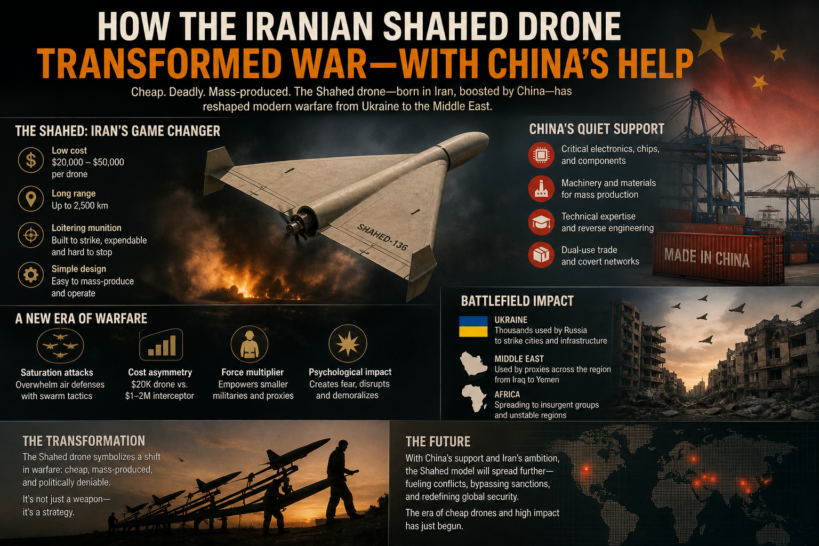
The Shahed series of unmanned aerial vehicles (UAVs) has emerged as a significant element in contemporary conflict, illustrating how modernization, proliferation, and strategic collaboration can alter the calculus of war. Originating in Iran, Shahed drones have been deployed in various theaters and have attracted attention for their relatively low cost, large sortie numbers, and evolving capabilities. Reports indicate that collaborations with external partners, including technology and components sourced abroad, have influenced the development and deployment patterns of these systems. The conversation surrounding their impact centers on strategic tempo, target selection, and the broader implications for regional security and global arms dynamics.
Technological Profile and Evolution
Shahed drones are typically categorized by endurance, payload, and stealth-like features rather than true stealth design. Key characteristics include:
- Endurance and range: Medium-altitude, long-endurance platforms designed to loiter over targets and deliver munitions.
- Payload and accuracy: Conventional explosive warheads paired with guidance systems that enable precision or near-precision strikes under certain conditions.
- Manufacturing and supply chains: A combination of domestically produced components with imported or dual-use materials facilitating production and maintenance. The logistic footprint enables rapid scale-up in response to battlefield demands.
- Electronic and propulsion subsystems: Avionics, control links, and propulsion units underpin mission capability, with ongoing efforts to enhance reliability, reduce detectability, and complicate neutralization by countermeasures.
The trajectory of Shahed developments demonstrates a shift from basic loitering munitions to more capable platforms capable of indirect fire roles, reconnaissance, and extended-range operations. This progression has influenced how adversaries plan defenses, stage countermeasures, and anticipate attrition on the battlefield.
China’s Involvement and Context
Publicly reported and open-source analyses indicate that Iran’s drone program has benefited from international collaboration and supply networks. In particular, Chinese involvement is cited within broader discussions of regional security and illicit procurement networks. The nature of such assistance can encompass:
- Technical know-how and design philosophy: Shared insights into autonomous navigation, control architectures, and system integration.
- Supply-chain facilitation: Access to materials, components, and manufacturing methods that support production scale and efficiency.
- Joint or parallel development perspectives: Alignment on strategic goals and capabilities that complement Iran’s domestic capabilities and defense-industrial base.
The precise scope and mechanisms of collaboration vary across sources and time frames, reflecting the complexities of dual-use technology transfer, export controls, and geopolitical considerations. The overarching consequence of such engagement, as identified by analysts, lies in the acceleration of capability development, enabling broader operational utility within a range of theaters.
Strategic and Operational Implications
The adoption and proliferation of Shahed-type platforms have several strategic effects:
- Increased tempo of operations: The relative affordability of these systems allows for large-scale, persistent presence over contested areas, thereby increasing the burden on opposing air defenses and counter-drone assets.
- Layered defense challenges: As drones evolve, they intersect with traditional air defense, electronic warfare, and cyber resilience. Forces must integrate multi-domain defenses to disrupt launch, control, and guidance links.
- Deterrence and escalation dynamics: The ability to threaten critical infrastructure and personnel with lower-cost munitions can influence escalation thresholds and decision-making in high-tensity conflicts.
- Supply-chain resilience and countermeasures: Adversaries respond with diversification of suppliers, hardened communication links, hardened storage, and more robust camouflage and concealment tactics for launch platforms.
The cumulative effect is a shift in how military planners allocate resources, prioritize intelligence gathering, and structure counter-UAV operations, with broader implications for regional power balances.
International Reactions and Norms
The emergence of Iranian drones and their perceived external support has prompted varied responses across the international community:
- Diplomatic dialogue: Nations engaged in regional security dialogues consider drone proliferation within broader discussions of arms control, restraint, and risk reduction.
- sanctions and export controls: Some actors pursue measures aimed at limiting access to dual-use technologies that facilitate drone production, while others argue for calibrated approaches to avoid unintended humanitarian consequences.
- humanitarian and legal considerations: The use of armed drones raises questions about compliance with international humanitarian law, including distinction, proportionality, and precautions in attack. The international community continues to debate accountability mechanisms and the need for shared norms in the governance of autonomous weapons systems.
These reactions shape the operational environment, influence alliance dynamics, and affect the strategic choices available to both drone-owning states and their adversaries.
Ethical and Legal Dimensions
The deployment of low-cost, rapidly scalable UAVs intersects with ethical and legal debates on warfare in several respects:
- Civilian protection: The risk of unintended harm to civilians in densely populated regions necessitates rigorous targeting protocols, validation procedures, and continual assessment of collateral effects.
- Accountability: Clear lines of responsibility for decision-making in autonomous or semi-autonomous strike scenarios remain a focal point for international law and policy discussions.
- Proliferation risks: The ease of replication and adaptation of drone platforms amplifies concerns about uncontrolled spread and the escalation of regional conflicts.
A measured approach to governance, grounded in international law and humanitarian principles, is essential to minimizing harm while recognizing legitimate defense needs.
Operational Lessons for Defense Postures
Several actionable takeaways emerge for states seeking to adapt to drone-enabled contest:
- Invest in multi-layered air defense: Combine kinetic and non-kinetic measures, including electronic warfare, cyber resilience, and hardening of critical assets.
- Strengthen intelligence, surveillance, and reconnaissance (ISR): Enhance real-time visibility into drone activity, launch patterns, and supply networks to anticipate threats and disrupt operations early.
- Develop counter-UAS doctrines: Establish integrated command-and-control procedures, dedicated units, and rapid-equipment cycles to field effective countermeasures.
- Promote international collaboration: Engage with like-minded partners to share best practices, capacity-building efforts, and counter-proliferation strategies within legitimate security frameworks.
These considerations support a holistic security posture capable of mitigating the evolving advantages conferred by drone technology.
Conclusion
The Shahed drone family, reinforced by international collaboration and an adaptable defense-industrial framework, has reshaped aspects of modern warfare. Its implications extend beyond battlefield performance to influence deterrence dynamics, alliance structures, and the norms governing armed conflict. As nations navigate this evolving landscape, a balanced emphasis on capability development, legal compliance, and responsible governance will be essential to maintaining strategic stability and protecting civilian lives.

