











Bill to limit stock trading in US Congress blocked in Senate
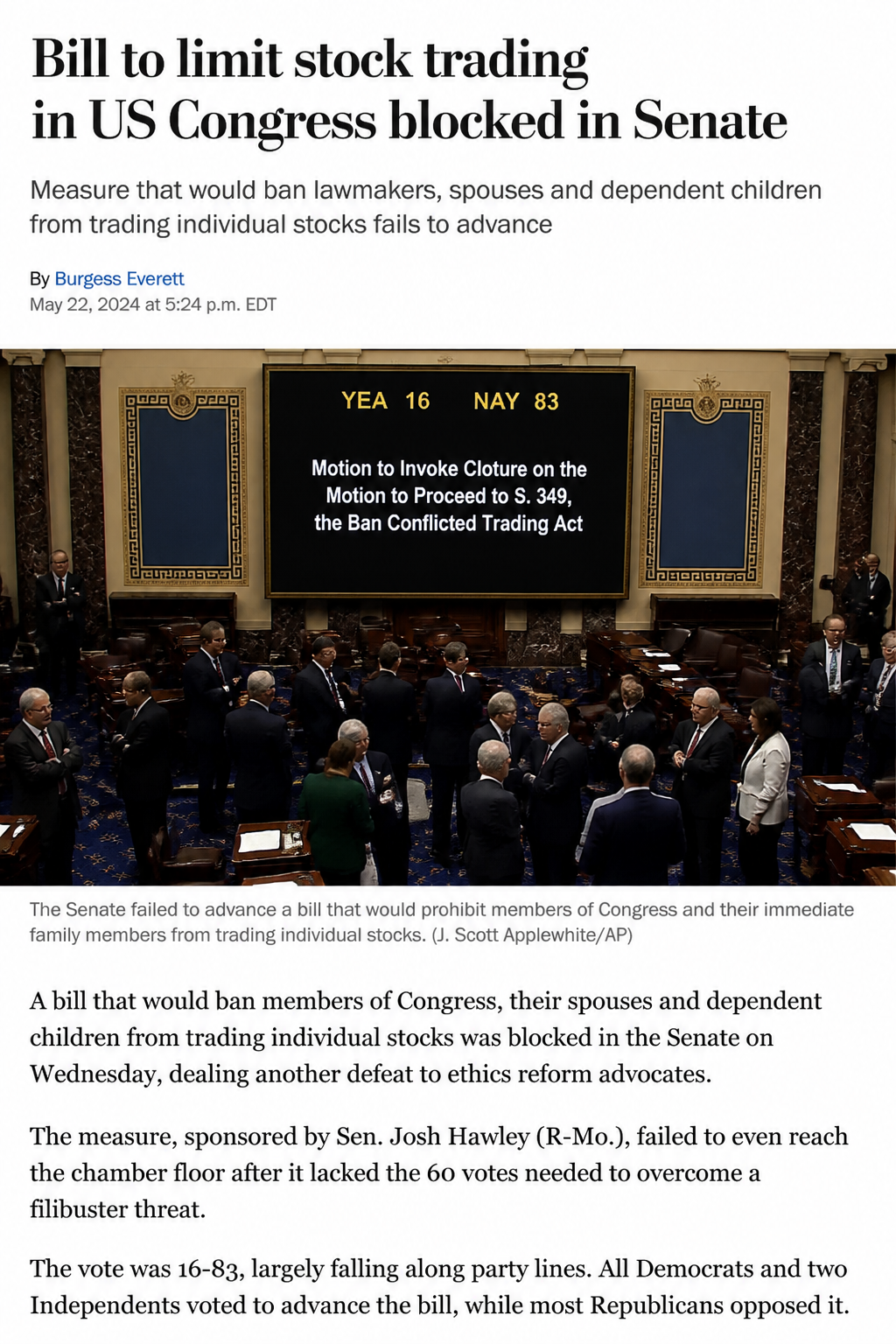
The Bill to limit stock trading in US Congress blocked in Senate has stalled in the Senate. This delay prevents it from advancing to a final vote.
Overview
- Aimed at increasing transparency and addressing concerns about conflicts of interest, the bill would prohibit members of Congress and immediate staff from trading individual stocks.
- Proponents argue that restricting personal investments reduces the appearance of impropriety and aligns lawmakers’ financial interests with the public interest.
- Opponents contend that the policy may be overly broad, challenging to enforce, or could constrain qualified individuals from serving in congressional roles.
Background
- The debate on lawmakers’ stock holdings has gained attention as public trust in federal institutions fluctuates.
- Several high-profile disclosures have driven calls for reforms to prevent potential conflicts of interest.
- Previous attempts to pass stock restrictions have faced procedural hurdles and partisan disagreement.
Legislative status
- The bill remains blocked in the Senate, with leadership signaling no immediate timetable for a floor vote.
- House of Representatives discussions and committee referrals have produced varying recommendations, but a final passage decision remains pending.
- Political dynamics, including party priorities and coalition-building, influence the bill’s prospects.
Key provisions
- Prohibition on trading individual stocks by covered officials and certain staff for specified periods.
- Requirements for blind trust arrangements or equity diversification where relevant.
- Enhanced disclosure requirements and possible penalties for non-compliance.
- Exemptions for routines such as broad market index funds or certain passive investments, subject to safeguards.
Arguments in support
- Reduces perceived conflicts of interest and bolsters public confidence in legislative processes.
- Promotes accountability and strengthens ethical standards for elected representatives.
- Addresses concerns about the timing of trades surrounding committee decisions or insider information.
Arguments opposing
- Critics argue the policy could be complicated to implement and enforce, potentially burdening officials.
- Some maintain that outright bans may deter qualified individuals from public service.
- Questions persist about the scope, definitions of “covered officials,” and acceptable investment vehicles.
Potential implications
- If enacted, lawmakers would adjust personal investment strategies to comply with the new rules.
- The measure could set a precedent for broader ethics reforms within Congress and related branches.
- Enforcement mechanisms would determine the effectiveness and credibility of the policy.
Next steps
- Negotiations among party leaders and committee members will shape revised language or alternative approaches.
- Stakeholder input from ethics bodies, watchdog groups, and constitutional experts may inform amendments.
- A pathway to a floor vote would require alignment on procedural rules and timing.
Comparative context
- Several other governments have implemented restrictions on public officials’ investments to various degrees.
- The debate in the United States continues to balance transparency, practicality, and the practicalities of political service.
Conclusion
The stalled measure reflects ongoing deliberations over how best to harmonize legislative duties with responsibilities to the public trust. As discussions continue, observers will watch for new proposals, amendments, and any shift in the Senate’s legislative agenda.


